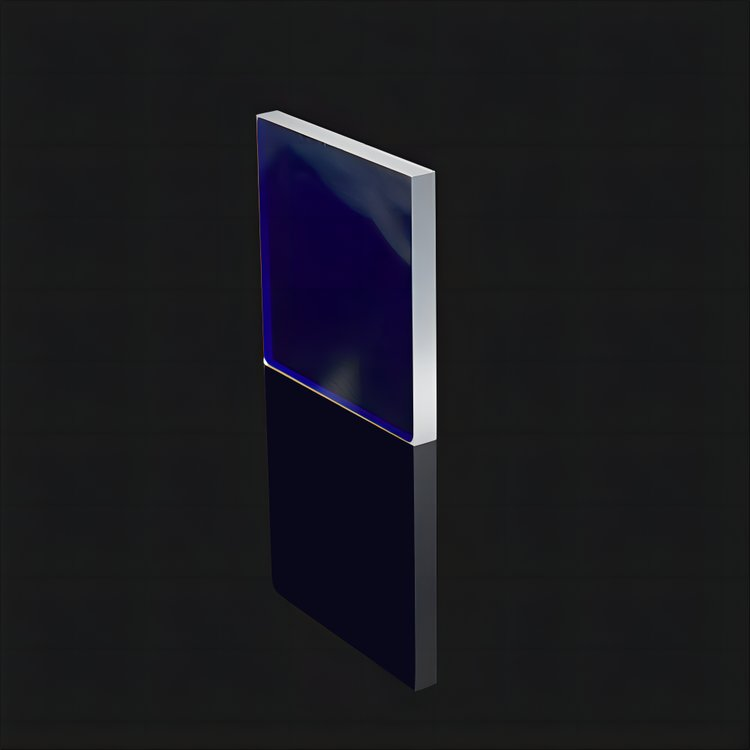
A dichroic mirror is a functional optical element designed based on the principle of optical interference, which can selectively reflect or transmit light within a specific spectral range according to wavelength. In practical applications, due to the significant differences in requirements for optical path, spatial layout, and performance parameters among different systems, it is often necessary to customize the size and specifications of dichroic mirrors. The common classification of customized sizes is mainly based on their geometric features, installation methods, and optical aperture dimensions. Circular is the most common custom shape, with diameters typically measured in millimeters. Common specifications include standard sizes such as 12.7mm (1/2 inch), 25.4mm (1 inch), 50.8mm (2 inches), and also support special requirements for non-standard diameters such as 30mm, 40mm, 60mm, etc. These circular lenses are widely used in microscopy imaging systems, laser beam combining devices, and fluorescence detection equipment, making them compatible with standard barrels and brackets. Rectangular or square dichroic mirrors are commonly used in compact optical modules or linear scanning systems. Their side length ratios are flexible and can match the incident light field according to the shape of the light spot, reducing edge obstruction and improving light energy utilization. This type of size is commonly found in industrial visual inspection and multispectral imaging equipment. In addition, there are customized shapes such as ellipses or structures with installation slots, mainly used for integrated optical systems with limited space or requiring precise positioning. From a usage perspective, size selection directly affects the degree of freedom in optical path design and the stability of the system. For example, in confocal microscopy, a dichroic mirror with a diameter of 25.4mm and a thickness of 3.2mm is usually used to ensure precise matching with the filter wheel assembly and achieve efficient separation of excitation light and emission light; In multi laser beam applications, large-sized products such as 50.8mm and above can reduce power density, avoid film damage caused by local overheating, and provide greater adjustment margin. Small size customization is common in portable testing instruments, balancing lightweight and functional integration. Overall, the size customization of dichroic mirrors requires comprehensive consideration of factors such as mechanical assembly space, beam divergence angle, adaptability to incident angle, and thermal management. Through reasonable selection, the optimal balance between optical performance and system integration can be achieved.