

The models of dichroic mirrors are mainly divided based on their spectral characteristics, incident angle, substrate materials, and application scenarios. Different manufacturers will provide diversified products based on standard or customized requirements. The following are common and representative model classifications and specific examples:
1、 Typical model types classified by spectral characteristics
Longpass Dichroic Mirrors
Reflects short wavelength light and transmits long wavelength light, commonly used in fluorescence microscopes to separate excitation light and emission light.
Example models: DM405, DM455, DM505
Flu-TS400 in the Flu TS series has high transparency in the range of 320-380nm and reflects light at 425-480nm.
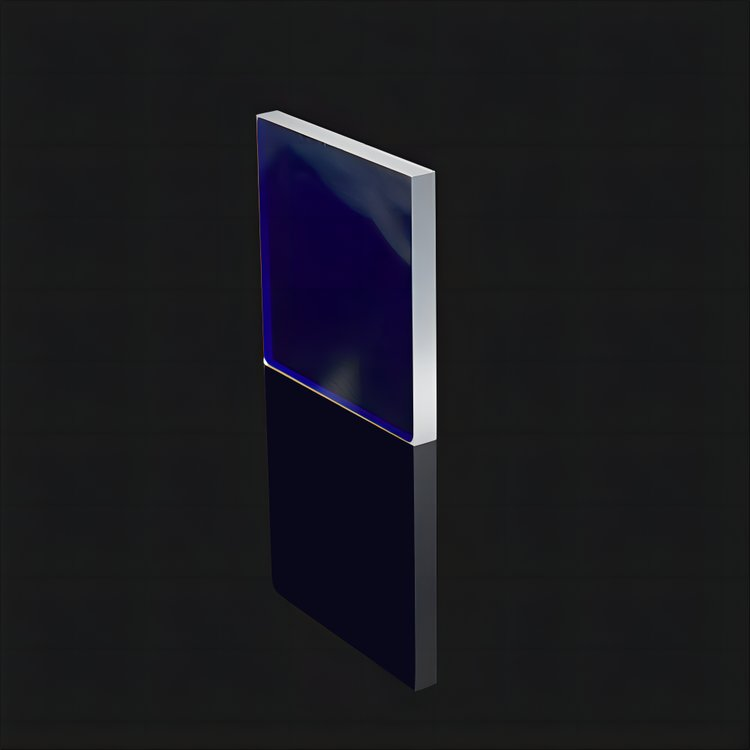
Shortpass Dichroic Mirrors
Reflects long wavelength light and transmits short wavelength light, suitable for UV/visible light separation scenes.
Example model: DM390
Reflects 200-390nm ultraviolet light at 45 ° incidence, with high transmittance of 400-1700nm visible and near-infrared light, suitable for high-power laser systems.
Bandpass or Sharp Cut Dichromics
Having an extremely narrow transition band, it achieves high-precision spectroscopy and is commonly used in scientific research grade optical systems.
Example models: 66232, 66233
Specially designed for the 240-255nm wavelength range, it has high reflectivity and polarization insensitivity, and needs to be used in conjunction with a specific casing.
Multiband Dichroic Mirrors
Supports multiple transmission bands and one reflection band for complex optical path integration.
Example model: 740 nm/940 nm multi band mirror
Commonly used in multi-color imaging systems, such as the MB25.4mm specification product provided by LBTEK.
UV/VIS and UV/IR types
Optimized for UV laser applications, supporting broadband visible or infrared transmission.
Standard model series: 193/V-FR45, 266/V-FR45, etc
Based on fused silica substrate, it is suitable for 193nm to 353nm UV wavelength reflection, and transmits visible and near-infrared light at the same time.
