

In the field of optics, filter is an extremely important optical component that plays a crucial role in numerous technological applications.
What is the function of a filter?
A filter, in simple terms, is an optical device that selectively transmits light of a specific wavelength or band while blocking light of other wavelengths or bands. The working principle of a filter is based on the characteristics of light interference, diffraction, and absorption.
There are many classifications of filters. According to spectral characteristics, it can be divided into bandpass filters, cutoff filters, long wave pass filters, and short wave pass filters.
A bandpass filter only allows light within a specific wavelength range to pass through, like the narrowband filter commonly used in fluorescence microscopes, which can accurately select the wavelength range for excitation and emission of fluorescence. Cut off filters start cutting off at specific wavelengths or allow light shorter than that wavelength to pass through, known as short wave cut filters; Or allow light longer than this wavelength to pass through, that is, long wave cut filters.
According to the production process and materials of filters, they can be divided into thin film filters, glass filters, and crystal filters.
Thin film filters achieve filtering function by depositing multiple layers of optical thin films on the substrate, and have advantages such as small size and stable performance.
Glass filters usually add specific absorbents to glass to achieve filtering, commonly including colored glass filters.
Crystal filters utilize the birefringence or electro-optic effect of crystals to achieve filtering, such as lithium niobate crystal filters used in some high-precision optical instruments.
In astronomical observations, filters can help astronomers filter out specific wavelengths of light, allowing for better observation of distant galaxies, stars, and planets. By using specific filters, it is possible to observe invisible light bands such as ultraviolet and infrared, and obtain more information about celestial bodies.
In the medical field, filters have important applications. In laser therapy, the filter ensures that only specific wavelengths of laser reach the treatment site, improving the accuracy and safety of the treatment. In ophthalmic surgery, doctors use specific filters to ensure that the laser only acts on the eye tissue in need of treatment, without causing damage to surrounding healthy tissues.
Filter plays an important role in industrial production. In a color sorter, filters help distinguish materials of different colors and qualities. Accurately screen high-quality products based on the wavelength difference of reflected or transmitted light from materials, improving production efficiency and product quality.
In laser radar applications, filters effectively filter out stray light in the environment, ensuring that the receiving end only receives reflected light from specific laser sources, improving the accuracy and precision of distance measurement, and providing reliable data support for fields such as autonomous driving and geographic surveying.
The field of scientific research cannot do without filters. In physics experiments, researchers use filters to obtain light of specific wavelengths and study the interaction between light and matter.
In chemical analysis, a specific wavelength of light is selected through a filter to excite the sample and achieve analysis of its composition and structure.
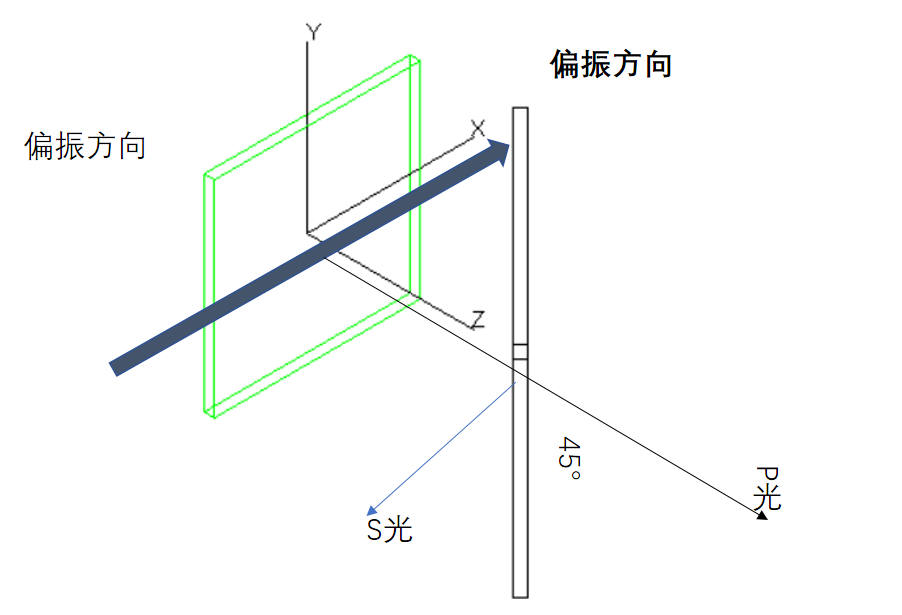
In fluorescence microscopy, multiple filters are typically used to observe the sample. The excitation filter selects light of a specific wavelength that excites the sample to produce fluorescence, while the emission filter filters out the excitation light and other stray light, allowing only the fluorescence of a specific wavelength emitted by the sample to pass through and clearly observe the structure and characteristics of the sample.
In the research and production of solar cells, filters are used to simulate different wavelengths of sunlight, evaluate the performance of solar cells under different lighting conditions, and provide important basis for improving the efficiency of solar cells.
As an important optical component, filters play a crucial role in many fields such as astronomy, medicine, industry, and scientific research.
