

The principle, structure, and application of polarizing film in the field of machine vision recognition
1、 Introduction:
In the field of optics, polarizing film is an important optical component. It can selectively transmit light in a specific polarization direction and control and adjust the polarization state of the light. Polarizers have a wide range of applications, from everyday sunglasses and LCD displays to machine vision recognition in the industrial field, all of which rely on their presence. This article will delve into the basic principles and structures of polarizing films, as well as their principle analysis in the field of machine vision recognition
2、 The basic principle of polarizing film:
Light is an electromagnetic wave, and the vibration direction of its electric and magnetic fields is perpendicular to the direction of light propagation. In its natural state, the direction of light vibration is random, and this type of light is called natural light. Polarized light refers to the vibration direction of light within a specific plane, which has a specific directionality.
The basic principle of polarizing film is based on the polarization characteristics of light and the dichroism of matter. Dichromaticity refers to the ability of certain substances to absorb or transmit light that vibrates in different directions. The materials in polarizing films, such as iodine molecules or polyvinyl alcohol, have this birefringence and can selectively absorb or block polarized light perpendicular to a specific direction, allowing only light in a specific polarization direction to pass through.
Specifically, when natural light is incident on a polarizer, only polarized light with the same polarization axis direction as the polarizer can pass through smoothly, while polarized light in other directions is absorbed or reflected. In this way, polarizers achieve control and screening of the polarization state of light.
3、 Structure of polarizing film
Polarizers are usually composed of multiple layers, mainly including the following parts:
1. Polarization material layer
This is the core part of the polarizer, composed of materials with birefringence. Common polarizing materials such as polyvinyl alcohol (PVA) have a certain directionality in their molecular arrangement after stretching and iodination treatment, thereby achieving polarization function.
2. Protective film
Located on both sides of the polarizing material layer, it serves to protect the polarizing material from external environmental influences. Protective films usually have good wear resistance, chemical corrosion resistance, and high temperature resistance.
3. Pressure sensitive adhesive layer
Used to attach polarizing film to other optical components or equipment, ensuring the stability and firmness of the polarizing film.
4. Release film
When the polarizer is not in use, it covers the pressure-sensitive adhesive layer to protect it. When using polarizing film, peel off the release film.
In addition, in order to improve the performance of polarizers, other coatings or structures may be added, such as anti reflective coatings, anti reflective films, etc.

4、 Principle analysis of polarizing film in the field of machine vision recognition
Machine vision recognition is the use of computers and image acquisition devices to obtain images, and to analyze and process the information in the images through algorithms, in order to achieve tasks such as recognition, detection, and measurement of target objects. Polarizers play an important role in this process.
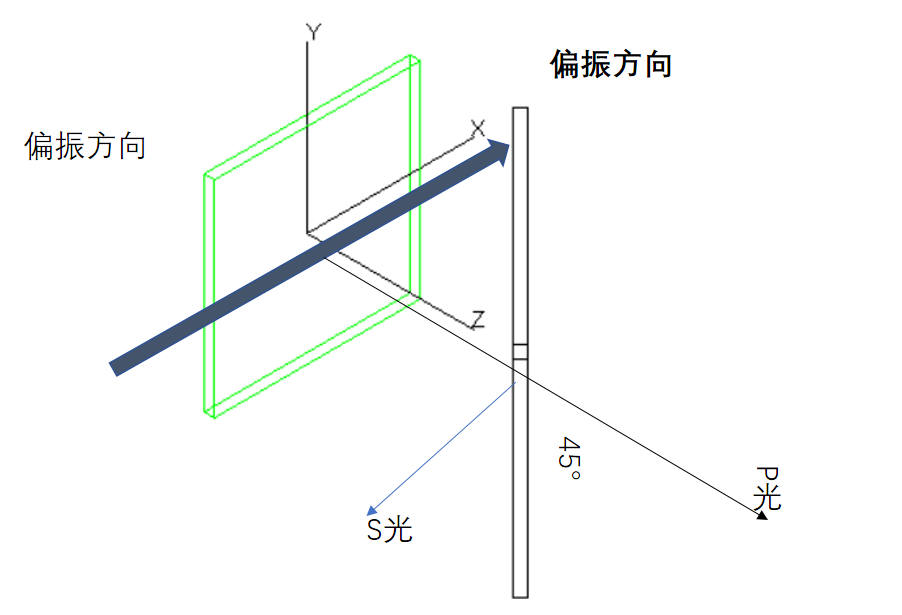
1. Reduce reflection and glare
In many machine vision application scenarios, such as metal surface detection, glass product detection, etc., the reflection and glare on the surface of objects can seriously interfere with the quality of images, leading to misjudgment or inaccurate detection. Polarizers can effectively reduce reflection and glare because reflected light usually has a specific polarization direction, which can be filtered out by using polarizers, thereby improving the contrast and clarity of images.
For example, when detecting scratches or defects on metal surfaces, reflected light can make the scratches less noticeable. By installing polarizing film in front of the image acquisition device and adjusting its polarization direction, the reflected light can be significantly reduced, making scratches clear and visible, and improving the accuracy of detection.
2. Enhance the contrast of the image
For some objects or scenes with low contrast, polarizers can enhance the contrast of the image by selectively transmitting light in specific polarization directions. This helps highlight the features of the target object, making it easier for machine vision systems to recognize and analyze.
For example, when detecting small components on a printed circuit board, the image contrast is low due to the small color and brightness differences between the components. The use of polarizing film can enhance the contrast between components and the background, making it easier for machine vision systems to accurately identify and locate components.
3. Eliminate background interference
In some cases, background light may interfere with the detection of target objects. Polarizers can filter out interference components in the background light by adjusting the polarization direction, making the target object more prominent.
For example, when detecting impurities inside a transparent object, background light can interfere by passing through the transparent object. The use of polarizing film can reduce the influence of background light and make impurities easier to detect.
4. Polarization encoding
In some complex machine vision systems, polarizers can also be used for polarization encoding. By combining multiple polarizers with different polarization directions, unique polarization encoding information can be assigned to different regions or objects in the image. Then, by processing and decoding the encoded image, more information about the shape, texture, and depth of the object can be obtained.
For example, in a 3D machine vision system, images of objects in different polarization states can be obtained through polarizers with different polarization directions and multiple image acquisition devices, thereby achieving accurate measurement and reconstruction of the three-dimensional shape of the object.
5. Used in conjunction with other optical components
Polarizers are often used in conjunction with other optical components such as lenses, filters, etc. to achieve more complex optical functions. For example, combining with a lens can adjust the focus and imaging effect of light, while combining with a filter can select specific wavelengths of light for detection.
In practical machine vision recognition systems, it is necessary to select the appropriate polarizer type, polarization direction, and installation method based on specific application scenarios and detection requirements to achieve the best detection effect. At the same time, it is necessary to combine advanced image processing algorithms and machine learning techniques to accurately analyze and recognize polarized images.
5、 Conclusion
Polarizers, as an important optical component, are based on the polarization characteristics of light and the dichroism of matter. Through carefully designed structures, they achieve control over the polarization state of light. In the field of machine vision recognition, polarizers play a key role in improving image quality and detection accuracy by reducing reflection and glare, enhancing contrast, and eliminating background interference. With the continuous development of machine vision technology and the increasing demand for applications, higher requirements will be put forward for the performance and application of polarizers, further promoting the innovation and development of polarizer technology. In the future, we can expect polarizers to play a more important role in machine vision recognition and the wider field of optics, bringing more convenience and innovation to human production and life.
